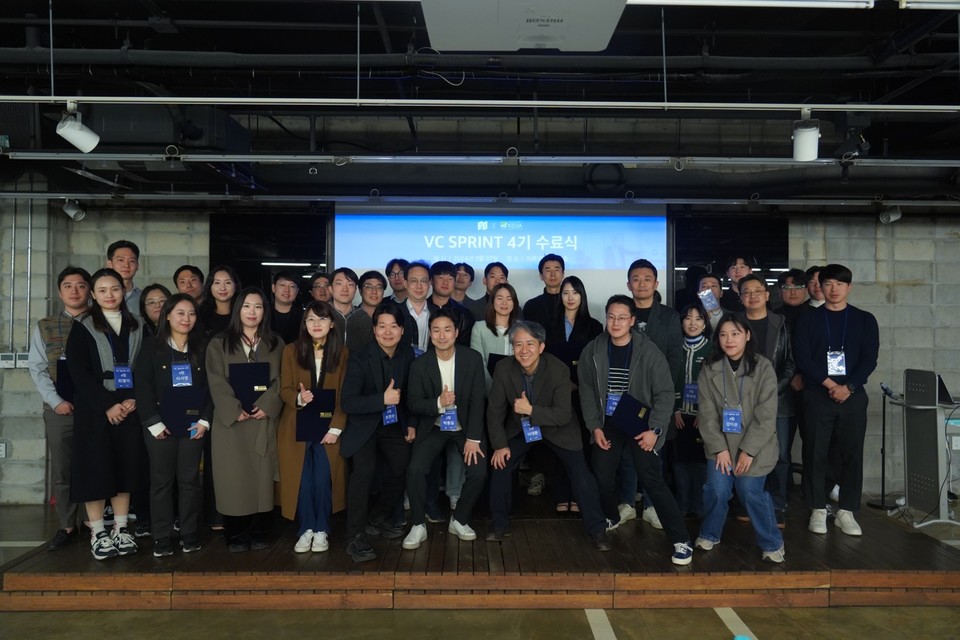
"Completion of the 4th Cohort of 'Early-Stage Investment Analyst Training' VC Sprint"
In my mid-40s,
I believed there was nothing left I hadn't experienced,
having lived a busy life.
However, curiosity sparked when an MZ-generation colleague introduced me
to the world of startups and investment markets.
Seeking answers, I applied for an early-stage investment analyst course,
which became an opportunity to finally confront a long-held dream—
entrepreneurship.
It also became the push I needed
to break free from the "addictive salary" cycle.
I am deeply grateful to the instructors who guided us
and to my fellow cohort members who shared this journey.
Let's keep in touch and meet often in the future!
#KoreaEarlyStageInvestmentAssociation #EOSStudio #StartupEntrepreneurship
Why a Maritime Professional Went Back to School for Investment
The short answer: maritime technology is moving faster than the industry's capital allocation models can keep up with. OT security startups, autonomous vessel platforms, digital twin providers, green propulsion ventures — the deal flow in maritime tech is real, and it is growing. But most of the people making funding decisions have never set foot on a ship. And most of the people who have spent careers at sea have no framework for evaluating a cap table or a term sheet.
The VC Sprint program — run by the Korea Early-Stage Investment Association — gave me that framework. Over several weeks, our cohort worked through deal sourcing, financial modelling for pre-revenue companies, due diligence checklists, and the mechanics of convertible notes and SAFE agreements. Most of my classmates were younger and came from technology or finance backgrounds. What I brought was twenty-plus years of understanding how the maritime industry actually works — where the friction points are, which problems are genuinely unsolved, and which technologies are solutions looking for problems.
More than the technical content, the program cracked something open personally. The "addictive salary" I mentioned in the original post is real — a steady income from a stable employer can quietly suppress the risk tolerance that entrepreneurship requires. Sitting in rooms with people who had voluntarily stepped off that path, who were building things with uncertain outcomes and finding it more alive than any job they had held, was a kind of permission to think differently about what the next chapter could look like.
I finished the 4th cohort with a clearer sense of where I want to go — and a few ideas I am not ready to share publicly yet. Watch this space.
⚓ Join the ShipPaulJobs Community
Join →


Comments
Post a Comment