
Deep Learning Fundamentals: Neural Networks, CNN, RNN, LSTM & Transformers — Foundations for Maritime AI, Smart Ship & OT Security Applications
DNN · Backpropagation · CNN / RNN / LSTM / Attention · TensorFlow / PyTorch · Transfer Learning · Maritime AI

LinkedIn: linkedin.com/in/shipjobs
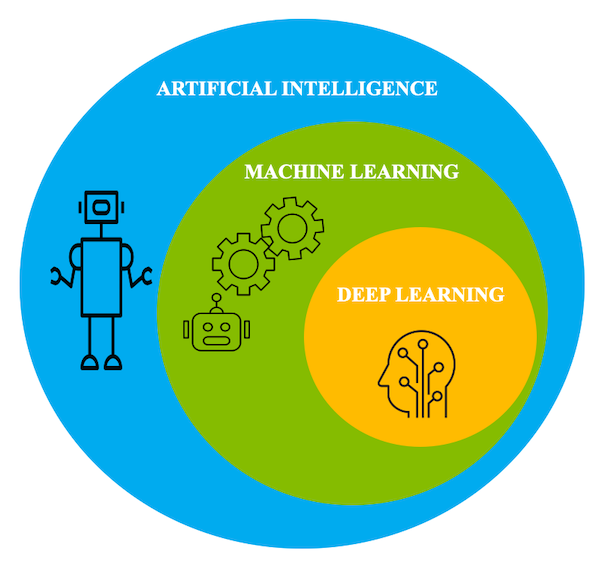
Deep Learning is the engine behind modern AI — from the image classifiers on your phone to the large language models reshaping industries. Understanding its foundations is no longer optional for engineers working in Maritime 4.0 environments.
This R&D note provides a structured walkthrough of Deep Learning fundamentals: what it is, how neural networks learn, which architectures solve which problems, and how these techniques apply directly to smart ship systems, OT anomaly detection, and maritime document intelligence.
② Core concepts: neural networks, backpropagation, activation functions
③ Key architectures: CNN, RNN, LSTM, Attention, Transformer
④ Frameworks (TensorFlow, PyTorch) and Transfer Learning
⑤ Maritime applications: predictive maintenance, vessel detection, cyber defense
I. What Is Deep Learning?
Deep Learning is a subfield of Machine Learning that models patterns in data using multi-layer neural networks. The "deep" refers to the number of hidden layers between input and output — enabling the model to learn hierarchical representations automatically from raw data.
Key Characteristics & Trade-offs
II. Core Concepts — How Neural Networks Learn
Artificial Neuron & Activation Functions
An artificial neuron receives weighted inputs, sums them, then applies an activation function to decide whether and how strongly to "fire." This mimics biological neurons and introduces non-linearity essential for learning complex patterns.
Backpropagation & Gradient Descent
import torch.optim as optim

optimizer = optim.Adam(model.parameters(), lr=1e-3)
# AdaGrad / RMSProp / SGD also available — Adam is the default starting point
Network Topologies
III. Key Architectures — CNN / RNN / LSTM / Transformer
CNN — Convolutional Neural Network
CNNs use convolution layers to detect local patterns (edges, textures, shapes) in images, followed by pooling layers for spatial down-sampling and fully-connected layers for classification. The dominant architecture for Computer Vision.
RNN & LSTM — Sequence Processing
RNNs process sequences by maintaining a hidden state that carries information across time steps. However, vanilla RNNs suffer from vanishing gradients over long sequences.
import torch.nn as nn

lstm = nn.LSTM(
    input_size=64,    # feature dimension per time step
    hidden_size=128,  # hidden state size
    num_layers=2,    # stacked LSTM layers
    batch_first=True
)
Attention Mechanism & Transformer ★
Attention is a generalized gating mechanism that assigns importance weights to input vectors — enabling the model to focus on the most relevant parts. The Transformer architecture (Vaswani et al., 2017) replaced recurrence entirely with Multi-Head Self-Attention, enabling full parallelism and becoming the foundation for BERT, GPT, and all modern LLMs.
IV. Frameworks & Transfer Learning
Transfer Learning — Pre-train Once, Fine-tune Anywhere
Transfer Learning adapts a model trained on one large dataset to a different, often smaller, target dataset. This is now the standard workflow in industry — training from scratch is rarely needed.
V. Maritime Applications of Deep Learning
The biggest shift in Deep Learning is not the algorithms — it's the workflow.
In 2024, most practitioners don't train from scratch. They select a pre-trained foundation model, fine-tune it on domain-specific data, and deploy. For maritime engineers, this means the barrier to building a vessel anomaly detector or a compliance chatbot is now a labeled dataset and a few hours of GPU time — not a PhD in machine learning. The key skill is knowing which architecture fits which problem: CNN for spatial data, LSTM for temporal sequences, Transformer for language and long-range dependencies.
From the neuron model and backpropagation to CNNs, LSTMs, and Transformers, this R&D note has covered the complete foundations of modern Deep Learning.
For maritime professionals, these are not abstract concepts — they are the engines behind predictive maintenance systems, vessel detection tools, OT anomaly detectors, and NLP-powered compliance assistants already entering the industry.
Next step: apply these foundations hands-on — build an LSTM-based engine sensor anomaly detector using PyTorch, trained on time-series data from ship machinery logs.
References & Further Reading
-
LeCun, Y., Bottou, L., Bengio, Y., & Haffner, P. (1998). Gradient-Based Learning Applied to Document Recognition (LeNet / CNN). Proceedings of the IEEE, 86(11).
https://ieeexplore.ieee.org/document/726791 -
Hochreiter, S., & Schmidhuber, J. (1997). Long Short-Term Memory (LSTM). Neural Computation, 9(8), 1735–1780.
https://www.bioinf.jku.at/publications/older/2604.pdf -
Vaswani, A. et al. (2017). Attention Is All You Need (Transformer). NeurIPS 2017.
https://arxiv.org/abs/1706.03762 -
He, K., Zhang, X., Ren, S., & Sun, J. (2015). Deep Residual Learning for Image Recognition (ResNet). CVPR 2016.
https://arxiv.org/abs/1512.03385 -
Kingma, D. P., & Ba, J. (2014). Adam: A Method for Stochastic Optimization. ICLR 2015.
https://arxiv.org/abs/1412.6980 -
Goodfellow, I., Bengio, Y., & Courville, A. (2016). Deep Learning. MIT Press.
https://www.deeplearningbook.org/ -
Nielsen, M. A. (2015). Neural Networks and Deep Learning. Determination Press (free online).
http://neuralnetworksanddeeplearning.com/ -
Karpathy, A. et al. (2015). CS231n: Convolutional Neural Networks for Visual Recognition. Stanford University (course notes & lectures).
https://cs231n.stanford.edu/
Deep Learning · NLP · Edge AI · Smart Ship · IACS UR E26/E27
⚓ Join the ShipPaulJobs Community
Join →


Comments
Post a Comment