[AI] Designing My AI Learning Curriculum as a Professional — Step 1: Subjects, Priorities & Keywords
AI Learning: Step 1 — Designing and Continuously Managing My Own Curriculum
A professional's framework for building a tailored AI learning path — beyond the student playbook

- LinkedIn : https://www.linkedin.com/in/shipjobs/
For students with ample time and energy, structured academic curricula work well. But for professionals who have just entered AI-related roles — is following the same student path appropriate or even feasible?
This note documents the curriculum design approach I developed for myself — and why I believe a tailored, self-managed learning strategy is the only viable path for working professionals entering the AI field.
Ⅰ. Why Generic Curricula Don't Work for Professionals
Aside from a few specialized AI departments, many educational curricula are still lacking — due to newly established departments, a significant shortage of professors, or insufficient resources relative to demand. But the deeper issue is structural.
Conclusion: Regardless of whether you're a student or a professional, it is essential to design a learning strategy tailored to your specific environment and goals. Generic curricula are a starting point, not a plan.
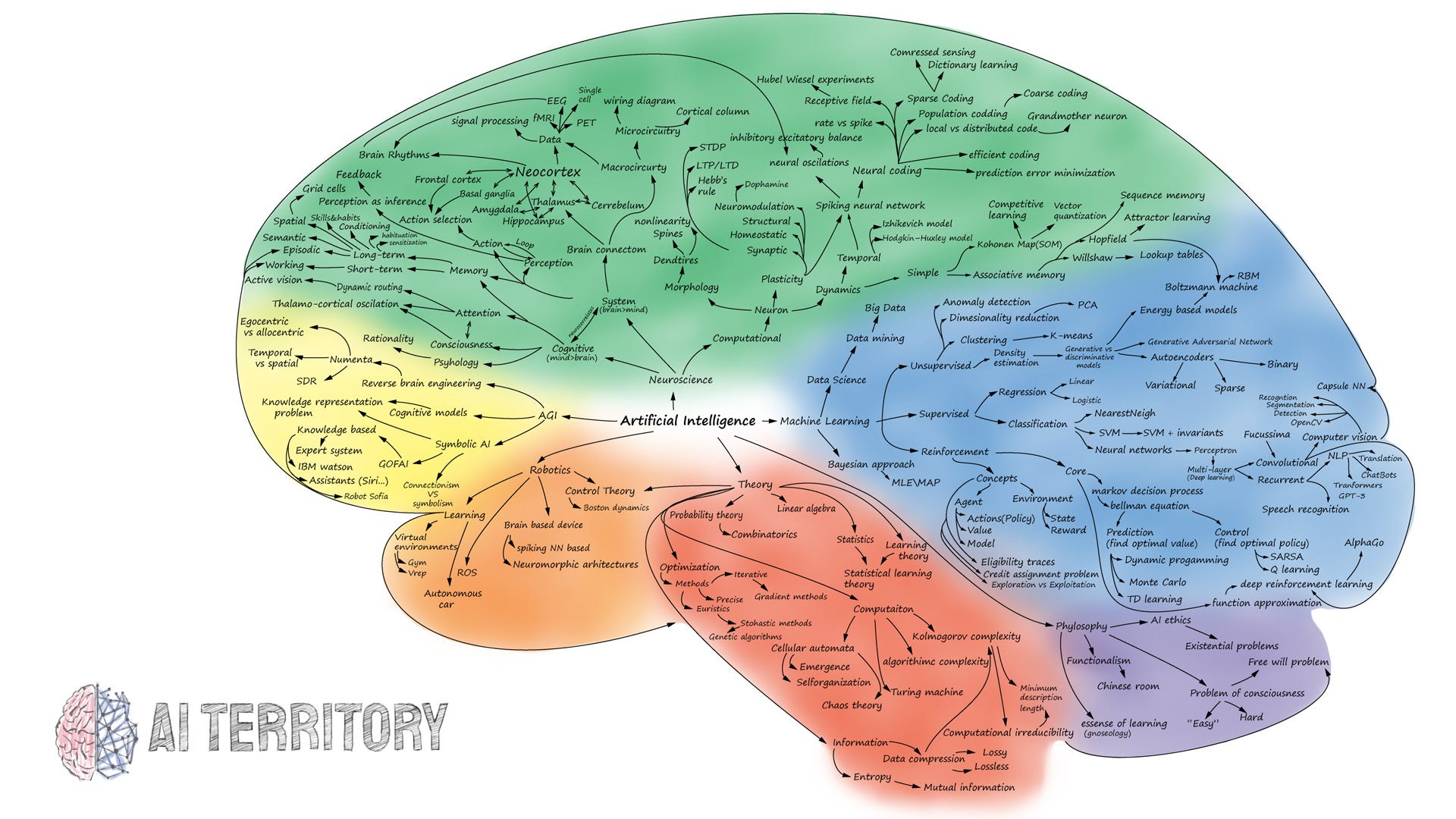
▲ Notice: This map is not a precise reflection of the state of the AI field, but just my subjective representation. (Source)
"I believe that if I had structured an AI learning curriculum aligned with my work tasks and maintained consistent learning during the period when my interest in AI first sparked, I would have been in a much better position today."
I especially want to prevent others — particularly those balancing work and studies — from having the same regrets. That's why I am now sharing the learning curriculum I've been maintaining in alignment with my work as a professional. If possible, I would like to receive feedback so I can continuously expand and improve it, addressing any gaps along the way.
Ⅱ. 'Way to Come' Curriculum — Version 2021.01
Self-designed AI learning framework for working professionals
Concept Clarification & Organization
The first step is to clearly understand and organize key concepts — not memorize them. The goal is to build a mental map of how the AI field is structured before drilling into any specific area.
-
✓
Mind Mapping — Create a visual map connecting related concepts: AI → Machine Learning → Deep Learning → specific algorithms. See relationships, not just definitions.
-
✓
Diagrams / Flowcharts — Visualize how different processes within AI relate to each other. A flowchart of "how a model learns" is worth 10 hours of reading.
-
✓
Excel / Trello — Use structured tools to list and prioritize topics, track learning progress, and define measurable goals. What gets tracked gets done.
Define Subjects, Priorities, and Keywords
Once the conceptual map is in place, move on to creating a structured curriculum. The key is prioritization — not covering everything, but covering the right things in the right order for your specific role and goals.
-
·
Books · Online Courses · Tutorials · Research Papers
-
·
GitHub Repositories · MOOCs (Coursera, edX, Udacity)
-
·
Keywords per topic — e.g., NLP → tokenization, BERT, embeddings, attention mechanism
-
→
Set specific, measurable learning goals — e.g., "Master basic ML algorithms by month X"
-
→
Allocate dedicated time for hands-on practice — e.g., 2 hours/week for coding exercises alongside theory
The Curriculum Is the Strategy — Not What You Learn, But How You Decide What to Learn Next
AI is vast — the field map above confirms it. Without a clear goal and direction, time will pass faster than your skills grow. The students who succeed in AI programs succeed not because their curricula are perfect, but because they have a structured system for deciding what to study and when.
"Without a clear goal and direction, we'll soon run out of time just watching the flow pass by."
This curriculum is a living document — it will be updated as the field evolves and as my own understanding deepens. Feedback is welcome. If you're a professional navigating the same challenge, let's build this together.
Comments
Post a Comment